Every child’s “ready for kindergarten” moment looks different. For our oldest, confidence came in the form of a matching backpack and lunch box set. Two years later, our youngest only cared about getting her hands on (and crayons in) a great white shark pencil box. So, I fished around until I hooked one.
But, Mom, true kindergarten readiness isn’t found in the supply aisles. While that back-to-school list is important, your child needs more than backpacks and pencil boxes to gear up for the classroom. If you’re wondering how to prepare for kindergarten, start by giving your child these 7 things not found on any shopping list.
1. Give him a book.
When you read together, your child learns new words, practices focusing, and develops emotional intelligence. And when you point to pictures to describe what you see, ask what might happen next in the story, or let your child turn the pages, you’re helping him build cognitive and motor skills. Plus, reading books about starting school gives your child a low-stress way to work through fears or jitters about it.
If daily reading feels overwhelming, try incorporating stories into your routine in other ways. Listen to audiobooks during car rides, read one short page or poem before bed, or let your child “read” to you by describing pictures in a book.
2. Give her a crayon.
Scribbling and drawing strengthen the fine motor skills needed for writing while providing opportunities for emotional expression. When your child creates something, ask her about it by simply saying: “Tell me about your drawing” or “Why did you choose red to draw that shape?” Those open-ended conversations build your child’s vocabulary and confidence in talking about her work. Bonus: Your child will create adorable artwork for you to display!
3. Give him a beat.
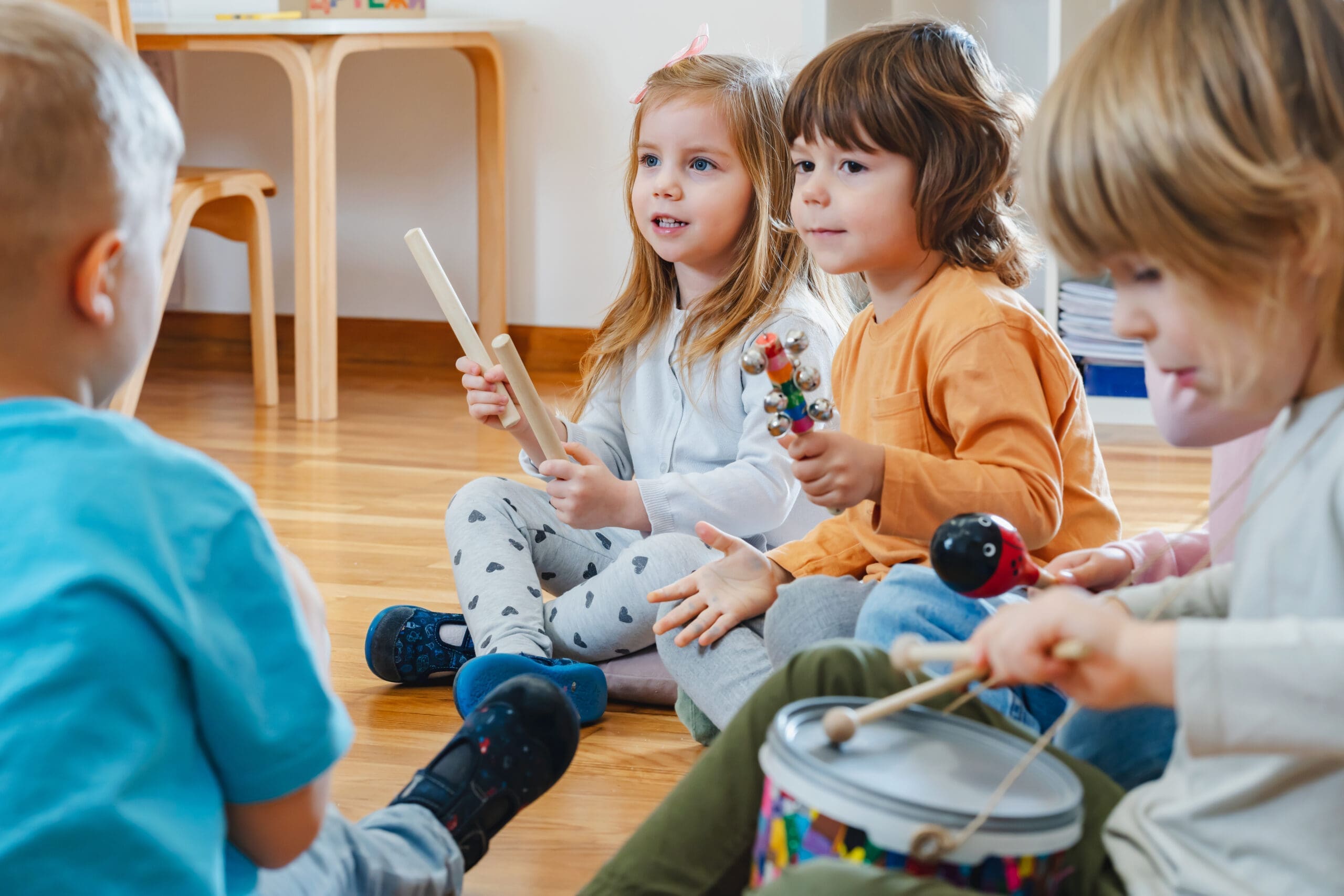
Every child connects to music. Clap patterns together, dance to different rhythms or create silly songs about daily routines. If your little one has sensory needs, adjust the activity to suit his comfort level. Use soft claps instead of loud ones, explore calming melodies, or provide noise-canceling headphones if loud sounds feel overwhelming.
Music activities support gross motor skills, language development, pattern recognition, and memory in ways that can be adapted to each child. Plus, music naturally encourages social interaction and emotional expression.
4. Give her a question.
Nurture curiosity by asking open-ended questions throughout the day. “What do you think will happen if…?” “How could we solve this?” “Why do you think that didn’t float in the bath?” Or mix in some of these Would You Rather questions. Asking your child questions encourages critical thinking and scientific reasoning and gives her practice at expressing her ideas.
For single moms (or working moms with packed schedules), even five minutes of focused attention can make a big difference. Ask questions about her day during the commute or as part of your tuck-in routine.
5. Give him the words.
Whether you’re cooking dinner, shopping for groceries, or driving to daycare, narrating your actions helps your child learn vocabulary naturally. For example, you might say, “The light turned yellow, so I need to slow down and get ready to stop.”
When your child points to something or tries to tell you about it, give him the words he needs: “Oh, you see the dog! Yes, that’s a big, brown dog wagging its tail.” This encourages verbal communication and builds confidence in expressing ideas.
6. Give her playtime with you.
Dedicated play sessions, even just 15 minutes, strengthen your bond and create learning opportunities for your little one. Follow your child’s lead. She might want to play with blocks, dress up like a dragon tamer (that makes YOU the dragon), or head outside to collect rocks. Encourage her to explore her interests while you play along!
Whether you can spend hours exploring new activities or just a few minutes between shifts, small moments of connection add up over time and develop your child’s social skills, creativity, and confidence.
7. Give him playtime with others.
Give your child plenty of opportunities to interact with peers through playdates, park visits, or library storytimes. Gently guide your child through these moments, too. For example, when another child wants to join in the fun, say, “Look, he wants to play ball, too. Should we roll the ball to him next?” Or, “Can I have a turn on the swing, please?” These real-world interactions help your child understand taking turns, sharing space, and using kind words.
One Final Note on How to Prepare for Kindergarten
While digital devices are increasingly present in our lives, young children learn best through physical play and real-world interactions. Consider limiting screen time and focusing on hands-on activities instead. And remember, every child develops at his or her own pace. Talk with your pediatrician if you have concerns about your child’s development in any area.
After reading these ideas about how to prepare for kindergarten, what aspects of the transition do you feel most prepared to handle?