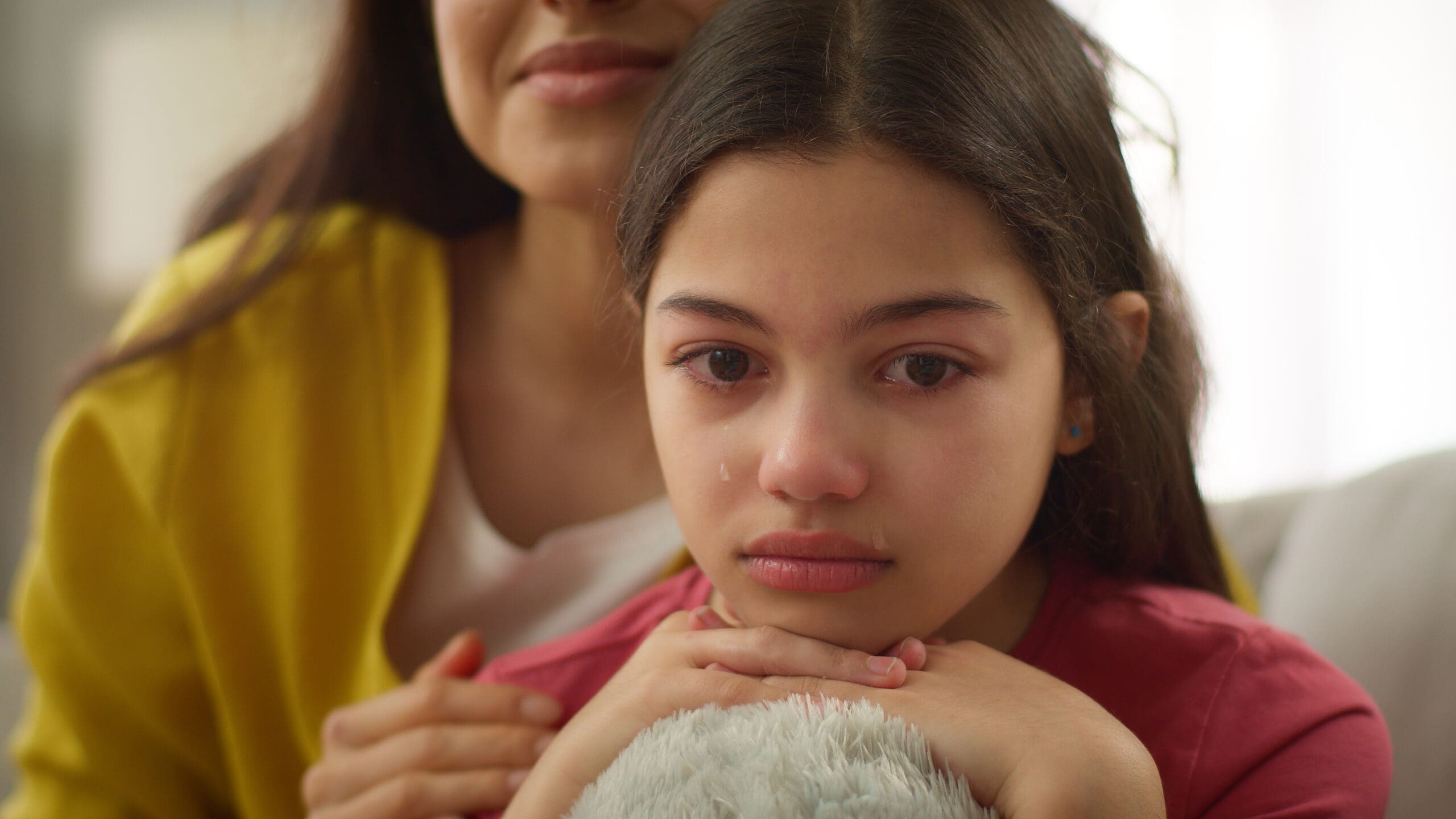
Whether your child has the occasional bout of anxiety or is struggling with anxious feelings on a daily basis, you can help. Treating childhood anxiety starts with you at home. Mom, you have the ability to make a significant impact on your child’s mental health. Here are 4 ways to put your mom-power to work and treat anxiety in your child.
1. Utilize your position as a parent.
Mom, if your child is anxious, we know you’re stressed about it. You want to help, but aren’t always sure what to do. My first piece of advice is to not ignore it and hope it’ll go away. The second thing is not to give up. Anxiety is treatable, but according to Dr. Daniel Pine, “[M]ost people who have these problems don’t get the treatments that could really help them.”
But parents who know how to respond to their children’s anxiety and communicate “confidence in their ability to cope with their feelings” will likely see success. In this research study, parents who were taught strategies to use at home had similar success as parents whose children received cognitive behavioral therapy (CBT) from a counselor. “Both treatments reduced the children’s level of anxiety and anxiety-related emotional disorders to a similar degree. … The finding[s] suggest that both approaches work equally well to reduce childhood anxiety.” In other words, learning how to work with your child at home matters! You can play a big role in helping your child feel better.
Below, we have some ways you can work with your child. But to learn more about CBT, you may want to read up on it or visit a mental health professional to get started. Keep in mind all children are different and some children with certain anxiety disorders should work with a professional to learn what course of treatment will work best and whether medication is needed.
We know it isn’t easy, Mom. If you have a child who worries a lot, that stress often carries over to you. But nobody loves your child like you do, and with some knowledge and know-how, you can still make a difference in reducing your child’s anxiety. Plus, the research says parents who took their child to a counselor as well as parents who did the work at home both “experienced drops in parenting-related stress.” Keep reading to learn more.
2. Make sure he’s getting enough sleep.
If your child has symptoms of anxiety, take a close look at how much sleep she’s getting. This is key, according to doctors. If she’s acting anxious and irritable, she could be sleep-deprived. It sounds simple, but getting more deep and consistent sleep could put an end to your child’s excessive worries, negative thoughts, stomach aches, and other anxiety symptoms.
Dr. Emily Edlynn’s go-to phrase in her therapy practice and at home is “Sleep is everything” because if you’re not sleeping well, you’re not functioning well. Sleep is essential to mental health. Edlynn says, “What looks like anxiety or depression can transform when someone starts sleeping better.” Dr. Shimi Kang agrees, saying that when we don’t sleep well, our bodies send us warning signals and flashing lights such as fatigue, poor concentration, and anxiety.
In her book The Self-Motivated Kid, Kang discusses a hardworking teenager who juggled high honors, volunteer work, and studying for the SAT at the expense of his sleep. He came to her as a patient because he “thought he was going crazy and would end up in a psychiatric hospital.” Dr. Kang explained to this boy that he needed to prioritize sleep. “Within four days, he noticed a dramatic improvement in his mood, energy, focus, and concentration.” Within two weeks, he thanked Dr. Kang “for saving his life, when all I did was simply recommend more sleep.” She advises all of us to do the same for our kids, no medical degree required.
3. Enforce (yes, enforce) physical activity.
We all know exercise is good for us. But the connection between physical and mental health is both real and scientifically backed. In 2019, right before the pandemic, John J. Ratey, MD’s article in Harvard Health Publishing stated that one in three teenagers ages 13 to 18 reported having an anxiety disorder within the past year. And 63% of college students said they felt “tremendous anxiety” their freshman year. Not all, but many kids who are anxious or depressed spend lots of time on screens and live a more sedentary life. The answer may be to increase the amount of time kids and teenagers move their bodies. Ratey asserts that “lacing up your sneakers and getting out and moving may be the single best non-medical solution we have for preventing and treating anxiety.”
If your child’s on a sports team, she’s committed to showing up at certain times throughout the week to exercise. But if your child’s not sporty, it could be harder to get her moving. On Sarah Rosensweet’s peaceful parenting podcast, she says a parent shared this advice: “Short-term gain equals long-term pain, whereas short-term pain equals long-term gain.” In other words, it may be a struggle to get your kid to go outside and play or to convince your teenager to go for a run, but the long-term gain is mental health and anxiety relief. I’d say that’s worth your “pain” in the present, wouldn’t you?
Work on consistency with your child until it becomes second nature after school. “Exercising regularly builds up resources that bolster resilience against stormy emotions.” But, Ratey continues, even one heart-pumping day of exercise will provide relief and ease anxiety. Exercise is not only a tool for kids “suffering from chronic anxiety,” but it’s also good for those who “feel overly nervous and anxious about an upcoming test, a big presentation,” or a recital. You have what it takes, Mom. Treating childhood anxiety can begin today.
4. Encourage time outdoors.
When you were little, you probably played outside a lot. I know I did. But these days, my kids prefer to hang out indoors, and I know they’re not the only ones. However, too much time inside can contribute to childhood anxiety. Dr. Kang says “getting too little fresh air and sunshine has serious consequences,” one of which concerns our children’s mental health. Vitamin D comes from exposure to sunlight, and if our kids are inside all day studying or gaming, they’re probably not getting enough of it. Researchers in this study found that low vitamin D levels were linked to anxiety symptoms.
Doctors are now prescribing nature-based activities for patients to reduce stress, improve sleep, and treat anxiety. Researchers have found that gardening, farming, playing outdoor sports, and just being in nature can, indeed, “improve happiness and reduce anxiety.” The lure of screens is very strong! But stick with it, mom. Even setting your child up with a snack or a book outdoors is beneficial. And it’s one of the easiest and most inexpensive ways to combat childhood anxiety.
To learn more, check out this iMOM video:
How have you been treating childhood anxiety in your family?