Jealousy in children is natural. All parents expect “I wish I had a bike like his!” or “She always gets the lead in the play!” But how can you prepare for “Why can’t our family be like theirs?”
As single moms, we can’t fix our children’s pain, whether it’s because a father has passed away or a father has never been there. When our children are jealous of two-parent families, you might think all you can do is say you’re sorry that this is the way things are. But there are better responses. Here are 5 (They might make you feel better too!).
1. Remind them that no family is perfect.
Jealousy in children and adults often springs up because we imagine someone else’s life to be free of struggles, annoyances, or pain. Remind your kids that two-parent homes aren’t perfect either. We don’t know what other families are going through. When our kids realize everyone is dealing with their own issues, they’ll begin to lean toward compassion instead of jealousy.
What you can say: “I know the Melvins seem to have it all figured out, but every family has hard days. Even families that look perfect from the outside have their own struggles. We don’t know what’s happening behind closed doors.”
What you can do: Share an age-appropriate story from your own childhood about a time you felt jealous of another family, only to later discover they had struggles you didn’t know about.
2. Explain that sadness is OK.
In her book Going It Alone: Meeting the Challenges of Being a Single Mom, Michelle Howe says all people have “empty heart places” that can cause pain. You can fight against jealousy by helping your child understand that many things in life can bring a feeling of emptiness. Sadness is OK. It helps us know what love is. Help your child see that she’s not alone in her feelings of sadness or emptiness.
What you can say: “It makes sense that you feel sad about this. Sadness isn’t something you need to hide or ignore. Sadness shows that you care a lot about something. I feel sad sometimes too, and that’s OK. We can feel sad together and still be happy about other things.”
What you can do: Make it a habit to do a “feelings check” every day. Normalize that some days will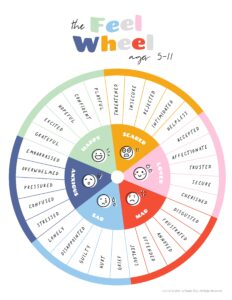 include sad feelings. Use a feelings wheel to help your child identify the emotion. And while she might initially express sadness, she might also feel lonely or disappointed.
3. Focus on gratitude.
Jealousy in children isn’t much different from what we experience as adults. It’s rooted in forgetfulness. We’ve forgotten all we have to be grateful for in our lives. When I start to feel jealous, I try to come up with three things I’m thankful for that day. When our kids focus on the good in their lives, it helps release the grip of jealousy on their hearts.
What you can say: “I know you wish things were different. When I start feeling that way, I try to think of three things I’m thankful for. It helps me remember the good stuff. Want to try it with me? I’ll go first…”
What you can do: Start a nightly “gratitude jar.” Keep it by the dinner table with paper slips and a pen. Each night, everyone writes (or draws, for little ones) one good thing from their day and drops it in. Read them together on Friday nights.
4. Encourage married couples to visit.
Howe also suggests inviting your married friends to become involved in your children’s lives so they can see other healthy families interact. You might invite another family over for dinner or attend events together. Your children will find comfort in their own “imperfect” single-parent family as they honestly get to know other “imperfect” two-parent families.
What you can say: “You know what might help? Spending more time with families we enjoy. I was thinking we could invite the Martinez family over for dinner. What do you think?”
What you can do: Plan regular low-key time with another family. Let your kids naturally see that all families have their messy, real moments alongside the good ones.
5. Reroute jealousy by helping others.
A surefire way to squash jealousy in children is to get out and help people. Serving others encourages children to move their focus from their own needs to the needs of others. It shows them they aren’t alone in pain and hardship and helps them develop compassion.
What you can say: “I know you’re feeling upset right now, and your feelings matter. But I’ve learned that helping someone else almost always makes me feel better. It doesn’t erase what’s hard, but it reminds me I have good things to give. Who could we help this week?”
What you can do: Find a family or child facing bigger challenges than yours. Your church or a local nonprofit is a good place to start. Let your child pick out a gift or gather supplies for them. The goal is to help your child see that even though your family doesn’t have everything, you still have something valuable to give.
What do you do when your kids start to show signs of jealousy of other families?