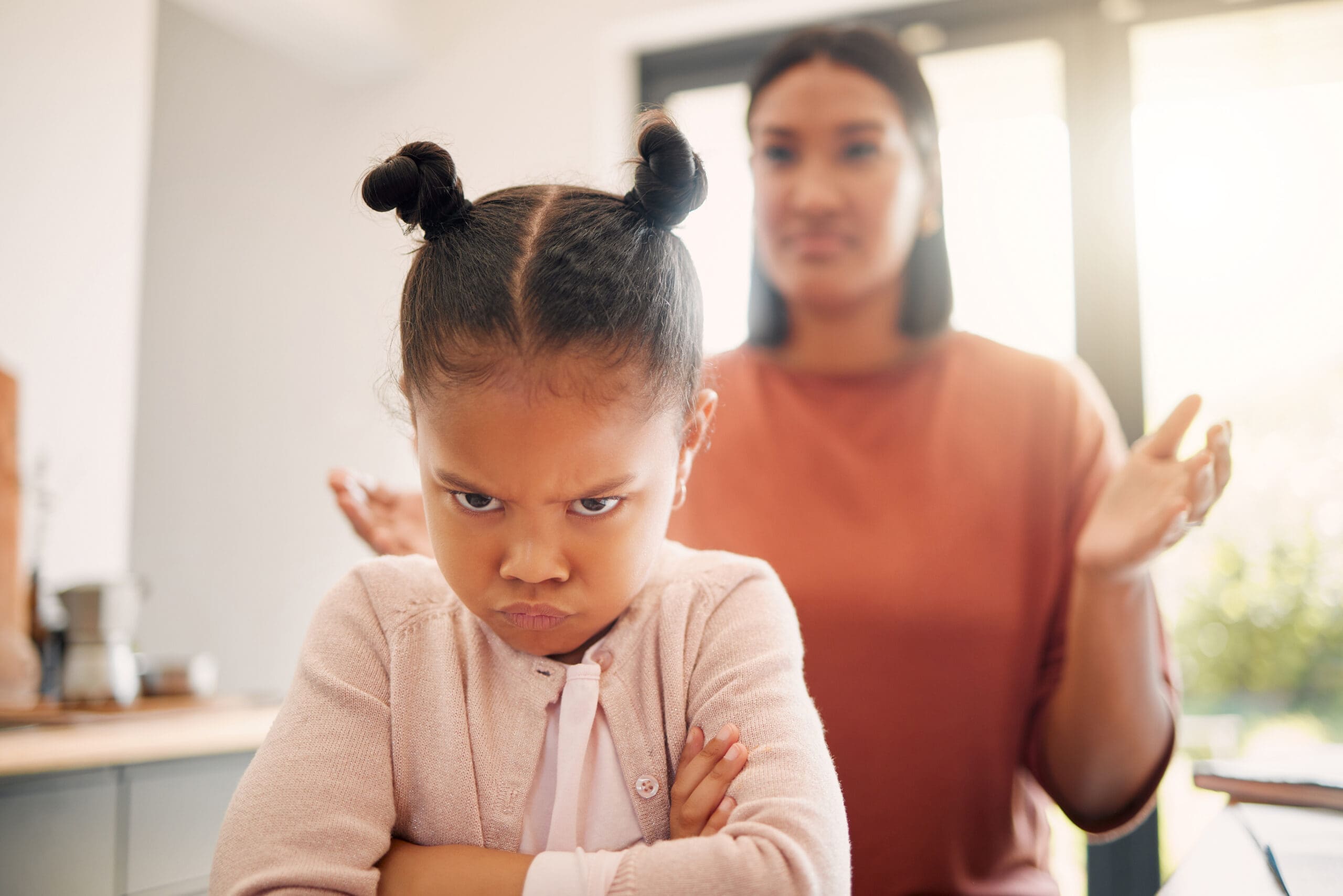
I recently took my kids to a family day at our city’s downtown art museum. There were lots of tables set up where the kids could create crafts, and other tables that offered candy. Guess which type of table brought on the whining? “Take only one candy, please,” the nice lady working a table told each child who approached. “Can I have two, Mom?” my son asked, one hand in the candy bowl and eyes looking hopefully up at me. I shook my head and reinforced the “just one” rule. “But I want two!” my son said, a lot louder this time. With each of my refusals, the volume increased, and the whininess ramped up. His final “Please!” in his best whine, and all of the other moms staring at me, made me give up and say, “Oh, OK, you can get two.” The nice lady kind of smirked, and I felt like a wimp. But parenting expert Dr. Scott Turansky has my back and says, “A child with a negative, complaining attitude can wear down even the best moms.”
So how can a mom stop the whining and complaining? Here are 6 things that Dr. Turansky says are worth giving a try.
1. Identify emotions.
Getting your child to express herself in healthy ways to stop the whining requires helping her identify her feelings (our Feel Wheel printable is great for that) so that she can express herself calmly and respectfully when she’s frustrated or making demands.
How to identify emotions: If your child is under five, use something like our Feel Wheel, mentioned above. If she starts whining about cleaning her room, show her the feel wheel and ask, “Which one shows how you feel?” If she chooses “mad,” say, “I see that you’re mad because you’d rather keep playing with your toys.” If she gives you a nod, you’re moving in the right direction. Next, say, “Let’s do this. As soon as you clean your room without whining, you can go back to playing. In fact, let’s line up your toys so they’ll be all ready for you.”
Try for no back-and-forth and no giving in. If you give in, she’ll be more likely to use whining again when she’s not getting her way. For older kids, try this Feel Wheel that has more nuanced choices. And try to remember that in kids, emotions often come out “sideways.” They kind of spill out and obscure the primary emotion because they don’t know how to express themselves or deal with their feelings directly.
2. Identify influences.
Try to pinpoint what’s influencing the choice of whining. For example, one father noticed his son’s frustration worsened after playing video games. After limiting his child’s screen time, he saw an improvement in attitude.
How to identify influences: Dr. Turansky says that maybe your child is mimicking the behavior of someone else—a parent, sibling, friend, or even an online character—who whines to get his way. And since young children haven’t yet developed the skill of emotional regulation, whining can become an automatic go-to. So is your child tired, hungry, or not feeling well? If it’s not anything like that, address the whining. Point out good examples of alternatives to whining. If his older brother chooses to ask nicely for something instead of whining to get his way, let your younger child hear you praise his older brother’s choice.
3. Point out attitudes.
Dr. Turansky says that when a child whines or complains, he might need help in learning how to properly handle emotions like disappointment or frustration. He might also need to adjust his attitude.
How to point out attitudes: Dr. Turansky says to stop the whining and complaining, focus on more than the behavior, and look deeper to see what’s causing the trouble. Once you’ve identified it, point it out to your child. “I saw that when you didn’t get your own way, you started calling your brother names. Is that a kind attitude?” Or, “Telling Mommy that I’m not fair because I wouldn’t give you that extra candy isn’t showing an attitude of being thankful for the candy I did give you, is it?” Of course, if your child is in the middle of a meltdown, you might have to wait a while before you point out bad attitudes.
4. Challenge attitudes.
Once you’ve pointed out the bad attitude that goes hand in hand with your child’s whining and complaining, challenge it. This will help your child see that it’s possible to choose an alternative way to express herself and her wants.
How to challenge attitudes: If you hear your daughter whine, “Having homework stinks!” acknowledge her feelings and then challenge the attitude. Say something like, “Yeah, homework is not always fun, but that negative attitude and whining about it will just make it seem harder. I know you can get through it even if it does stink. You can do it, right?” Dr. Turansky also says there’s nothing wrong with offering motivation to change an attitude. “How about this? Work hard for the next hour with a good attitude, and then we’ll get you some ice cream.” Hopefully, the real reward of accomplishing something even when she doesn’t want to will eventually motivate a change in attitude.
5. Teach responses.
Dr. Turansky says that “If your child automatically responds to discipline or disappointment with whining or complaining, teach her how to react properly.” He says that a child’s appropriate response to not getting to stay up late should be something like, “Maybe next time,” or simply, “OK.”
How to teach responses: If your child starts whining or complaining, tell her to obey first, and then you’ll listen to what she has to say. You can also say, “Ask me again without whining, please.” If your child still doesn’t get the answer she wants, tell her that it’s OK to share her disappointment with you in a respectful way, but without whining or complaining.
Dr. Turansky says older kids can learn the “wise appeal.” “Mom, I know you want me to go to bed now, but my show only has ten more minutes.” There’s no whining and no complaining in the wise appeal. Let your child know that the privilege of using the wise appeal comes with being OK with an answer of no.
6. Praise progress.
When you notice your child making improvements and whining and complaining less, praise him and let him know you’re proud.
How to praise progress: “Oliver, you did a great job cleaning your room. I can’t believe you did it so quickly and you didn’t whine one bit! I’m going to tell Dad what an awesome job you did.” Even if you’re tempted, refrain from comments such as, “It’s about time!” Instead, encourage him in his progress and keep the focus positive.
Dr. Turansky summarizes learning how to stop whining and complaining with this: “Attitudes are windows into a child’s heart. If you help your children learn to adjust attitudes, they will have the skills necessary to develop healthy perspectives about life’s challenges and struggles as they get older.”
How do you handle whining and complaining in your home?
Source: Good and Angry: Exchanging Frustration for Character in You and Your Kids! by Scott Turansky and Joanne Miller
Dr. Scott Turansky is an author and speaker known for his heartfelt parenting approach. He offers moms practical, real-life advice for many of parenting’s greatest challenges and is the founder of the National Center for Biblical Parenting.