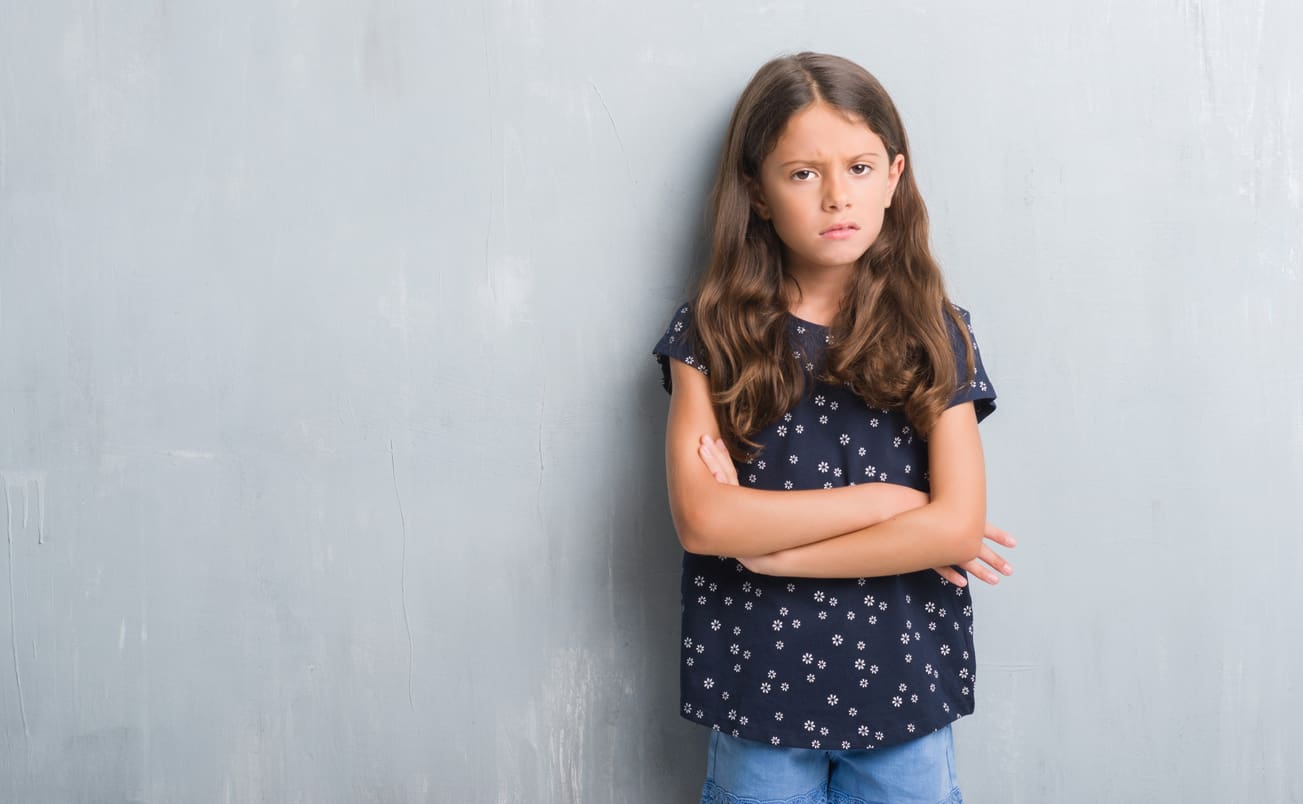
Oh, the horrors of having a child with a bad attitude—especially during the holidays! On Thanksgiving day, Great Aunt Sadie walks in and your son crosses his arms and pouts when she asks him for a hug. Or, your teenage daughter rolls her eyes when you ask her to help clear the table. And even when your kids do act respectful on the outside, you can tell that their attitude is out of whack.
So even during the season of holiday cheer, don’t overlook a bad attitude in your kids. Dig below the surface and consider these thoughts to answer the question, where does a bad attitude come from in kids?
Sometimes children obey, but they do it with a bad attitude. A bad attitude comes from an angry spirit. Imagine an onion with various layers. As you peel off one layer, you see another and another until you get to the center of the onion. Anger is like that. The most obvious signs of anger are acts of physical violence: Hitting, slamming things, kicking, and biting.
As children learn to control their physical reactions, the next layer becomes obvious. It involves hurtful words such as sarcasm, teasing, and cynical remarks. They are not physical, but they are still deadly responses that parents must address. Layer after layer of angry responses can be removed until you come to a very significant one: The bad attitude. Once you reach the bad attitude layer, you’re dealing with the heart directly. A bad attitude is form of passive resistance and shouldn’t be ignored. Huffing or rolling the eyes after receiving an instruction is a symptom of a deeper problem. When a bad attitude isn’t addressed, anger reveals itself in selfish, disrespectful, and mean behaviors.
Bad attitudes are generally seen in three areas:
- When the child receives an instruction.
- When the child is corrected.
- When the child is told no.
Don’t just point out a bad attitude. Give children healthy alternatives. How should a child respond when given an instruction they’d rather not do? “Okay” is a good place to start. How should a child respond when being corrected? “I’m sorry” or “I was wrong.” How should a child respond when disappointed with a “no” answer? “Okay, maybe next time.” This may sound unrealistic if your children have developed strong patterns of opposition. These suggestions, though, will get children thinking in the right direction.
If you son is angry and having a bad attitude, teach him to take a break and cool off. “Go to your room and settle down until you can talk about your anger without using your body to show it.” When your son returns, talk to him about more constructive responses.
If you discipline your child to change behavior but a bad attitude remains, the discipline is incomplete. A child who adjusts behavior but continues to harbor a poor attitude needs to learn honor. If not addressed, bad attitudes just get worse.
Step back and ask yourself, “Why is this child struggling with a bad attitude?” This will help you focus your discipline. One mom recognized that her five-year-old son needed more sleep. Another mom realized her nine-year-old needed to learn perseverance—the ability to hang in there when things got tough. Don’t ignore a bad attitude; it directly reflects a problem of dishonor in a child’s life.
Dr. Scott Turansky is an author and speaker known for his heartfelt parenting approach. He offers moms practical, real-life advice for many of parenting’s greatest challenges and is the founder of the National Center for Biblical Parenting.