
For six years, every day after school, my mini-me and I shared a snack and swapped stories. I’d hear all about playing Sharks and Minnows at recess, who got picked as line leader, and whose mom packed cookies for lunch. Then middle school happened. Suddenly, our after-school check-ins shrank to one-word answers. And my once chatty little girl carried her snack up to her room instead of the kitchen table.
Of course, that’s normal teen behavior, but it doesn’t make it any easier on our momma hearts, does it? And while some days we get responses like “fine” and “good,” the next it might be silence, even when our Mom Radar pings that something’s off. Getting your kid to open up might take a little more finesse than it used to, but it’s far from mission impossible. Here are 6 secrets for getting teens to talk (and keep talking).
1. Avoid accidentally teaching your kid to stay silent.
As moms, we don’t mean to shut our kids down. However, when they do share something, our reactions sometimes send the wrong message. Think about it from their perspective. If every time they open up, they’re met with lectures, knee-jerk consequences, or disappointment, why would they continue to share? It begins to feel easier to keep things to themselves.
Do this: When your kid starts to share, take a deep breath before reacting. (I like to say a little silent prayer, too: “Jesus, help me stay open and calm.”) When you start by centering yourself, you create a safe emotional space for getting teens to talk openly.
And if you mess up? That’s OK, too. You can always circle back with something like, “I didn’t respond well earlier. I’m sorry. Can we try that conversation again?” Your teen will respect your honesty.
2. Be mindful of your first words.
Your initial response to whatever your tween shares sets the tone for the entire conversation. (No pressure.) Your first few words are like the opening notes of a song. They determine whether the vibe will stay chill or head into a mosh pit. So definitely avoid saying “hormonal” and these words too.
Instead, when your tween shares something difficult, phrases like “That sounds really hard” or “I’m so glad you told me” signal safety, even if you’re panicking inside. Those words remind your child that you’re on the same side and that you place a premium value on honesty in your relationship.
Do this: Practice a few go-to lines before you need them. So when your child approaches with that hesitant “Mom, I need to tell you something,” you can be ready. Here are a few to keep in mind: Thank you for trusting me with this. Do you need me just to listen, or are you looking for help? I’m here to listen, not judge. This is a safe space.
3. Skip the fix and ask questions instead.
Asking teens questions instead of offering solutions helps them practice critical thinking and problem-solving skills. It’s also the easiest way to get teens to talk (and keep talking).
When teens get to articulate their problems and think them through with guiding questions, they often realize the situation isn’t as overwhelming as it first seemed. What initially sounded like “Everyone hates me!” or “I’m failing everything!” becomes more specific and manageable when they break it down. Plus, studies involving 7th-graders show that tweens given more autonomy are far more likely to follow through on solutions they help create than those handed to them.
Do this: When you feel the urge to say, “Here’s what you should do,” ask a question instead. “What do you think would help?” or “Can you tell me more about that?” are great go-to questions! It’s also OK to ask, “Are you open to hearing some possible solutions, or do you just need me to listen?”
4. When your kid drops a bombshell, don’t flinch.
I don’t play poker, but I’ve mastered the poker face. (Well, most of the time.) It came in handy when one of my teens confessed she was curious about drinking. I knew one wrong facial twitch and my kid would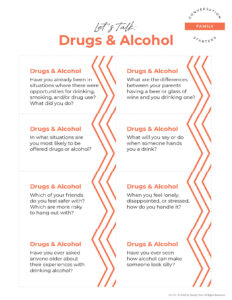 shut down, stop talking, and think twice about coming to me again. So I willed my face to stay neutral and asked some questions.
Even “good kids” can make poor choices during these years. From trying alcohol, vaping, getting speeding tickets, sneaking out, watching porn, and cheating with ChatGPT, tweens and teens can confess some doozies.
Do this: Keep an even voice, open body language, and a neutral expression. Your teen’s willingness to share something intense is a sign of trust, not a reason to panic. Staying steady proves you can handle her struggles without falling apart.
5. Stay open for talks at inconvenient times (and places).
Sometimes the most important conversations happen when you’re least prepared, like driving your kid home from practice at 9 p.m. or when you finally get into bed. These unexpected moments often feel safer to teens because there’s less pressure and formality. And the side-by-side chat in the car or the distraction of a shared activity can make vulnerable topics feel less, well, vulnerable because they can avoid direct eye contact.
Also, don’t be surprised if your teen prefers to talk to you over text. Sometimes it’s easier for them to type out hard things than say them face-to-face. Getting teens to talk means being open to whatever format works best for them.
Do this: If your teen starts to share something sensitive, resist the urge to reschedule the conversation to a “better” time. Instead, just like you stopped to tend to a skinned knee during the toddler years, be open to talk when your teen needs you.
6. End the conversation with a door, not a wall.
Teens rarely work through significant issues in a single conversation. (Even if one of their parents is a licensed professional counselor, trust me!) Instead, they need time to process and often come back with new questions or perspectives. So getting teens to talk includes leaving space for the conversation to continue later.
Do this: Make it clear you’re still available by saying something like, “I’m here when you’re ready to talk more,” or, “After you’ve processed what we talked about, let’s check in with each other.” Leaving the door open creates space for ongoing check-ins, rather than one-and-done lectures.
What are your parenting secrets for getting teens to talk?