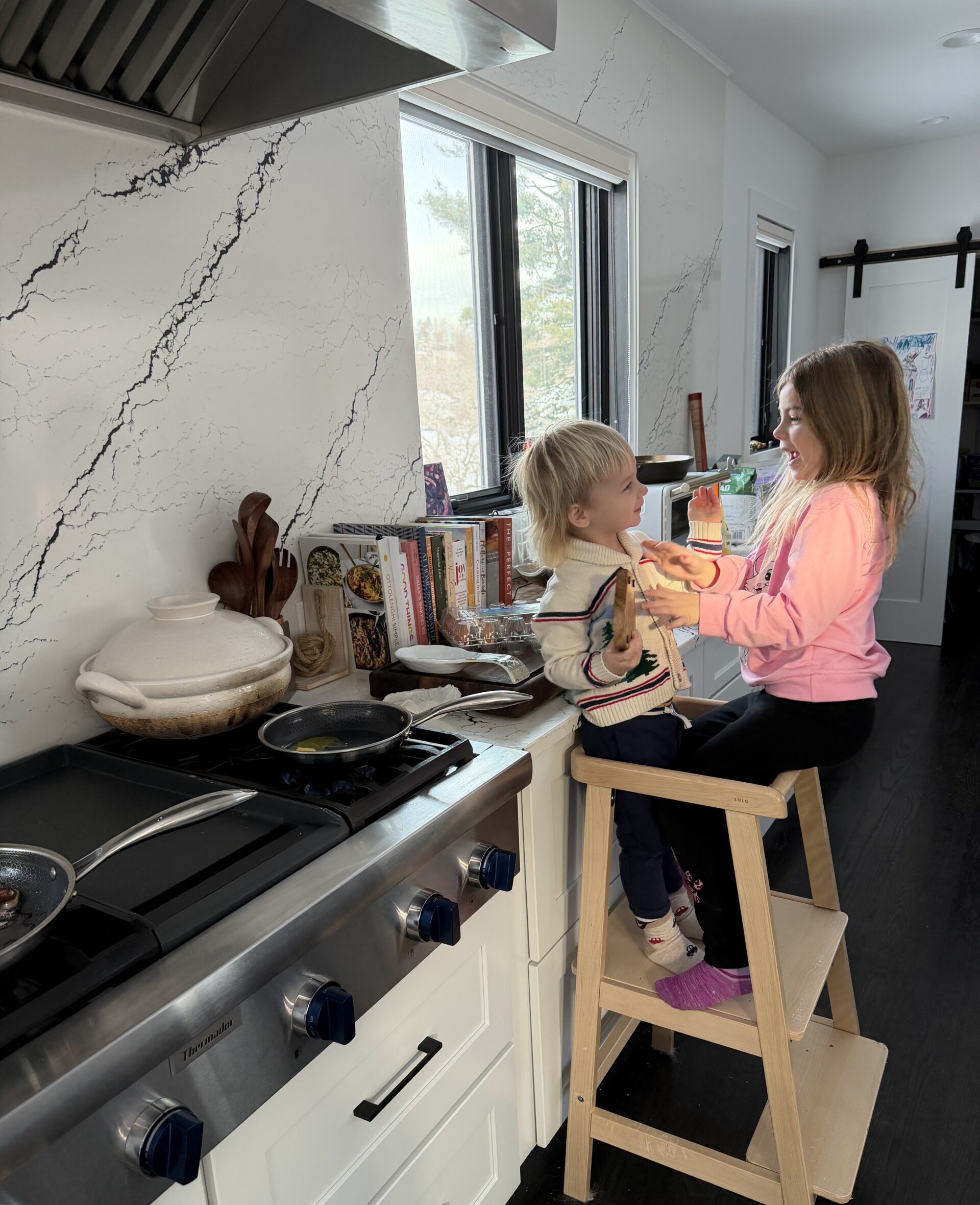
You know your Mom Checklist that you constantly mentally manage? The one that says you need to pack the perfect lunch, respond to every school email, show up looking put-together, manage bathtime without raising your voice, and somehow still have energy left over to be present and fun? And when you do manage to check off most of the boxes, there’s that voice inside your head saying: Well, you got it done, but it wasn’t perfect.
There’s a name for that pressure. Researchers call it performative mom culture. And that pressure can reshape how you parent and slowly steal your joy. Here’s what you need to know about performative mom culture and how to start releasing that pressure.
What does performative mom culture mean?
Performative mom culture is the mental pressure moms put on themselves to prove they are good parents, rather than just focusing on being one.
Think of it as steady pressure without a release valve. Instead of just feeding your kids chicken nuggets and calling it a win, you’re judging yourself for not making that all-organic bento box you saw on Instagram. When your two-year-old has a meltdown at the store, your initial thoughts are, “Am I handling this right? What are people thinking?” instead of “What does my child need?” You’re managing internal judgment and external perception instead of the moment.
This pressure never relents. At the playground, you’re monitoring whether your child is being “too rough.” At church, you’re hyper-aware of how loud your child talks. At family gatherings, you’re preemptively apologizing for your kid’s energy or emotions. You’re “performing” the role of mom instead of being one.
When we parent for an idealized version of motherhood instead of focusing on our kids’ needs, we face discouragement, exhaustion, and the nagging feeling that we’re never quite getting it right. That’s performative mom culture.
Why do I keep comparing myself to other moms?
Our brains naturally make comparisons. It’s one of the ways we learn. When you notice another mom’s calm tone when her child melts down, your brain takes notes. That’s healthy.
But social media reroutes this healthy instinct into unhealthy territory. A 2018 meta-analysis of brain imaging studies published in Human Brain Mapping found that comparing yourself to others and feeling like you’re falling short actually registers as pain in the brain. Your mind processes it the same way it would a physical injury. So if you’ve ever felt that pit in your stomach while watching influencer reels of organized pantries and color-coordinated kids, that’s a real neurological response. Once you recognize what’s happening, you can interrupt the pattern before it robs you of your peace.
There’s a difference between picking up a helpful hack from a friend and measuring yourself against curated strangers online at 11 p.m. One builds you up. The other tears you down.
Why does social media make me feel like a bad mom?
Social media turns healthy comparison into constant self-doubt. It teaches your brain to question your instincts, spikes your stress hormones, and robs you of present-moment joy with your kids. And in your everyday routines with your family, you find yourself thinking, “This would make a great post” before you think, “This is a great moment.”
A 2023 study in the Journal of Child and Family Studies found that parents who compare themselves to other parents online experience higher levels of stress and are less likely to trust their own parenting instincts.
This constant comparison keeps your body in a state of chronic stress. And, honestly, we all carry enough stress around just being a mom. We don’t need to add on more!
How do I know if I am being performative?
Ask yourself: “Would I make this same parenting choice if no one were watching?”
Here are some signs you might be parenting for an audience instead of your child:
Your first response is about perception, not connection. When your child doesn’t make the honor roll, your first thought is “What will other parents think?” instead of “How is my child feeling about this?”
You parent differently in public. You discipline, talk to, or respond to your kids one way at home and another way when others are watching because you’re worried about how it looks.
You lead with apologies. Before entering spaces with your child, you find yourself saying, “Sorry in advance,” as if your kid being a kid is something you need to excuse.
You feel like you’re competing. When another mom mentions her kid’s activities, you feel pressure to match or one-up, rather than just listen and encourage.
Performative mom culture wants you to believe that good mothering looks a certain way. But every mom-child pair is a unique relationship. You know your child best.
How can I stop comparing myself to other moms?
Breaking free from the performative mom culture starts with awareness. Notice your “audience check” moments. When do you find yourself thinking, “What will people think?” Certain situations, such as school events or when family visits, might trigger your performance mode.
Once you’ve identified your triggers, here are some practical ways to break the comparison cycle:
- Update your social media feed. Stop following accounts that make you feel inadequate and seek out those that show real, imperfect motherhood. (Or take a break from social media altogether and see how you feel.)
- Pause before you decide. Before making parenting decisions, ask yourself: Am I choosing this because it’s best for my child and family, or because of how it will look?
- Find your truth-teller mom. Connect with one friend who keeps it real (and you keep it real with her). She’s the one who won’t judge you when you say you’re feeding your kids cereal for dinner again. Instead, she’ll say, “Me, too!”
- Compare yourself to last year’s you, not to other moms. Are you more patient than you were six months ago? That’s growth worth celebrating.
You don’t need to prove you’re a good mom. The fact that you’re reading parenting articles is a clear sign that you already are one! Performative mom culture will keep stealing your joy if you let it, but awareness is the first step to freedom.
Where do you feel the pressure of performative mom culture most: at school pickup, at church, on social media, or somewhere else?