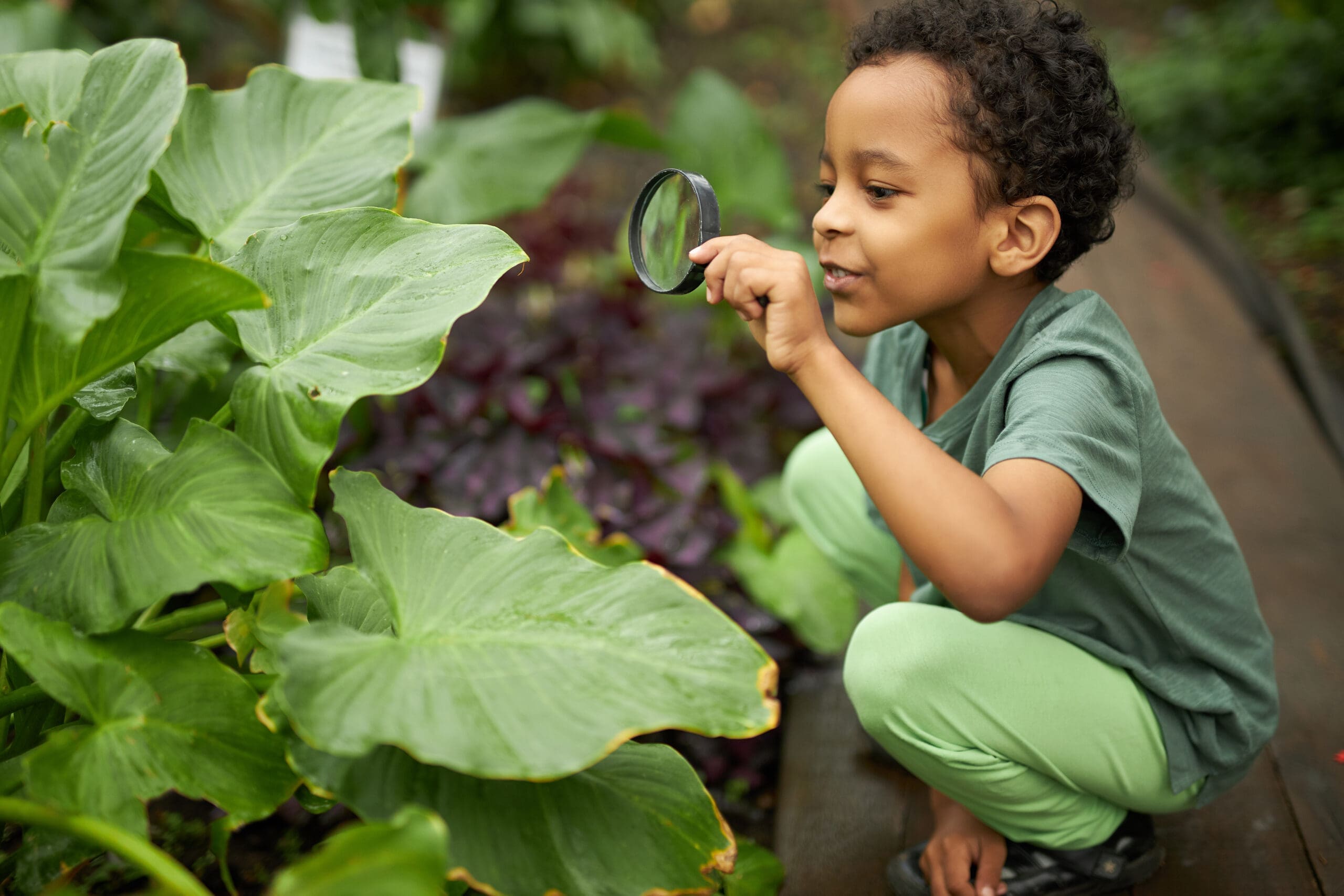
There’s a reason your toddler asks “why” or “how” a bazillion times a day. Between the ages of 2 and 5, children’s brains form more than 1 million new neural connections every second. And each question, like “How do worms breathe?” and “Why don’t dogs wear clothes?” is their curious brains reaching for understanding of their world.
But answering a barrage of questions while you’re unloading the dishwasher, responding to work emails, and figuring out what’s for dinner can feel overwhelming. Thankfully, nurturing your child’s curiosity doesn’t mean having all the answers or stopping everything to explain the world in detail. Instead, how to develop curiosity in your child often starts with simple responses that let your child explore ideas. Here are 4 specific ways to encourage your toddler’s natural sense of wonder through everyday moments.
1. Think out loud.
If you are a verbal processor, you probably already do this. I often ask questions (“How many pints are in a quart?”) that, until Amazon’s Alexa came into my life, I didn’t expect anyone in the room actually to answer.
As you go through your day with your toddler, look at everything with a sense of wonder and think out loud. “I wonder why chicken nuggets are shaped this way.” “That boy on the playground seemed lonely.” Verbalizing your own curiosity is a great idea for how to develop curiosity in your child.
2. Let her try even when you know she’ll fail.
If your daughter wants to carry a big bubble in her pocket, you know it’s going to end with a “pop!” but she doesn’t. You know mixing peach yogurt with pepper and a dog treat won’t be edible, but it’s worth the two ounces of yogurt to help her grow in curiosity. With your guidance, she’ll be eager to try more experiments. Whether they succeed or fail, she’ll be learning how the world around her works, and that’s a win.
3. Let him have all those collections.
My sons collected everything. Leaves, shells, sticks, rocks… I felt like there was more nature inside my home than outside. Collections allow kids to get curious about differences in like items. Why is that shell pink and white with scalloped ridges while the other one is all white and smooth?
4. Make your home more “curiosity friendly.”
My family loves theme parks. The rides, the shows, the colorful facades—we have so much fun, but I don’t think most theme parks help kids get curious. There’s just too much stimulation. We can fall into the trap of thinking our homes have to be as exciting as a day at the theme park, so we add screens, sounds, big colors, and fun toys that spin and have blinking lights.
One of the best ways to grow curiosity in kids is to scale back on the number and types of toys. Simple is better. Find toys that open the door to learning, like buckets and shovels, a magnifying glass, a scale, and jars for storing special finds!
What’s something your toddler is naturally curious about?